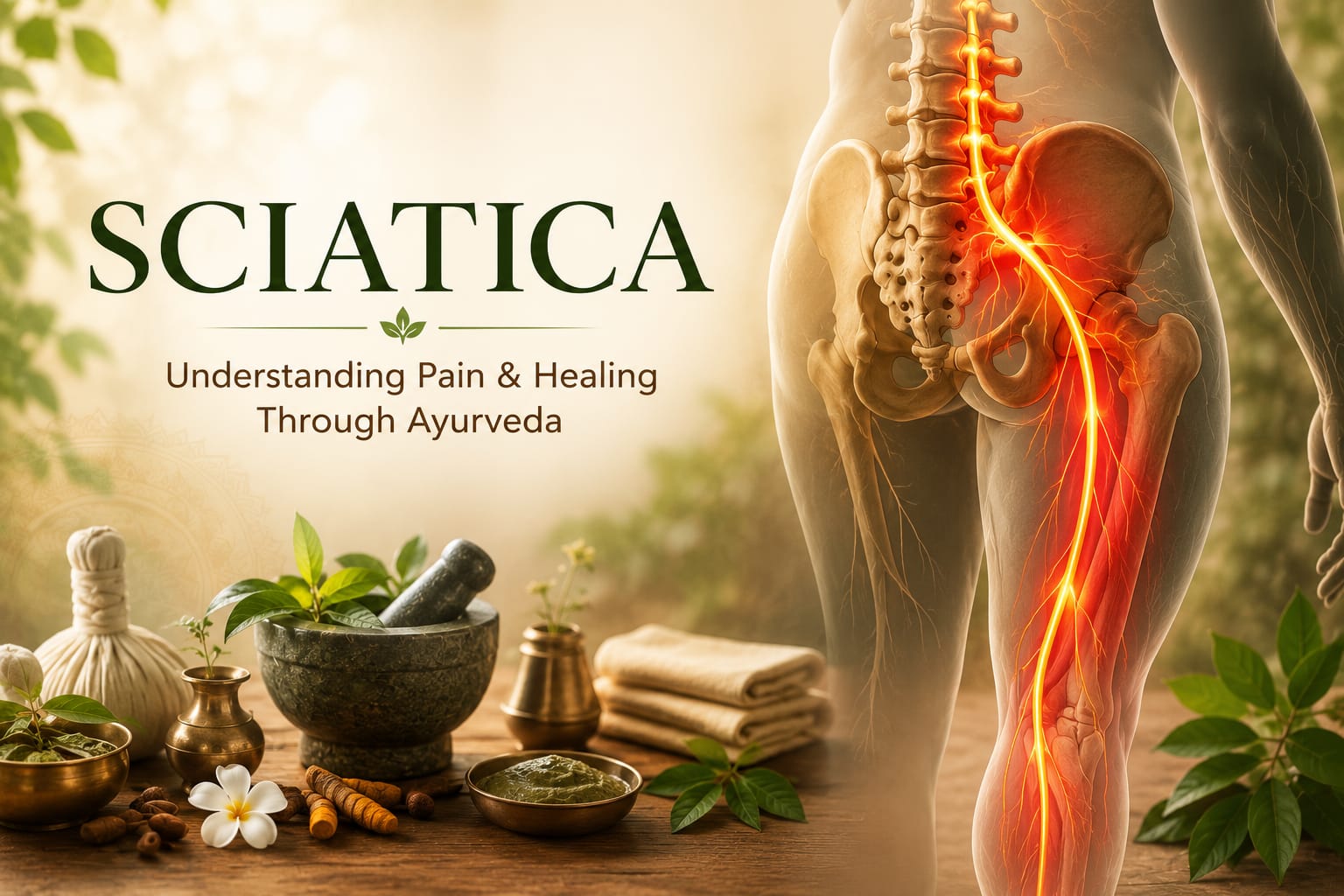
Sciatica: Understanding the Pain, Finding the Cause, and Healing Through Ayurveda
Introduction
There are few pains as frustrating and life disrupting as sciatica.
Many patients who walk into my consultation room at Sukrutham Ayurveda Chikitsalayam describe a similar experience. It often begins as a dull ache in the lower back. Over time, the pain starts travelling down the buttock, thigh, and sometimes all the way to the foot. Simple activities such as sitting, walking, climbing stairs, driving, or even sleeping become difficult.
What makes sciatica particularly challenging is not just the pain itself, but also the uncertainty it creates. People often wonder whether they should continue exercising, rest completely, undergo surgery, or simply live with the discomfort.
Over years of clinical practice, I have observed that many individuals seek help only after months or even years of suffering. By then, the condition has often progressed, affecting mobility, confidence, work productivity, and emotional well-being.
Ayurveda offers a unique perspective on sciatica—not merely as a nerve problem but as an imbalance affecting the body's functional systems, particularly Vata dosha. This deeper understanding helps us address not just symptoms but also the underlying causes contributing to recurring pain.
In this article, I would like to share how Ayurveda understands sciatica, what factors contribute to it, and how a personalised Ayurvedic approach can support recovery and long-term spinal health.
What Is Sciatica?
Sciatica is not a disease in itself. It is a collection of symptoms caused by irritation, compression, or inflammation of the sciatic nerve.
The sciatic nerve is the largest nerve in the human body. It originates from the lower spine and travels through the buttocks, down the back of the legs, and into the feet.
When this nerve becomes compressed or irritated, symptoms may develop along its pathway.
Common medical causes include:
- Lumbar disc prolapse (slipped disc)
- Degenerative disc disease
- Spinal stenosis
- Spondylosis
- Muscle tightness around the pelvis
- Injury to the lower back
- Postural abnormalities
While modern medicine identifies structural changes affecting the nerve, Ayurveda also explores why certain individuals become vulnerable to these conditions in the first place.
Sciatica through the Lens of Ayurveda
In Ayurveda, the symptoms of sciatica closely resemble a condition known as Gridhrasi.
The classical Ayurvedic texts describe Gridhrasi as a disorder characterised by pain radiating from the lower back into the buttock, thigh, knee, calf, and foot.
The name itself is interesting. It is derived from the word "Gridhra," meaning vulture. Patients with severe sciatica often develop a characteristic gait due to pain and stiffness, which resembles the movement described in the classical texts.
Ayurveda views sciatica primarily as a Vata disorder.
Vata governs:
- Movement
- Nerve impulses
- Joint function
- Muscular activity
- Sensory perception
When Vata becomes aggravated, it can disturb the normal functioning of nerves, muscles, joints, and connective tissues, leading to pain, stiffness, tingling, and restricted movement.
Root Causes According to Ayurveda
Sciatica rarely develops overnight.
In most cases, years of lifestyle habits gradually create conditions that aggravate Vata and weaken spinal structures.
Common Ayurvedic causes include:
Improper Diet
Excessive intake of:
- Dry foods
- Spicy and sour foods
- Processed foods
- Cold foods
- Irregular meals
- Excess fasting
These dietary habits increase Vata and reduce nourishment to tissues.
Overexertion
- Excessive physical work
- Heavy lifting
- Intense exercise without recovery
- Repetitive strain
Sedentary Lifestyle
Ironically, lack of movement can be just as harmful as overexertion.
Prolonged sitting weakens spinal support muscles and contributes to stiffness.
Mental Stress
Chronic stress has a profound influence on Vata.
Many patients notice worsening pain during emotionally demanding periods of life.
Age-Related Degeneration
As we age, Vata naturally increases in the body. This contributes to degeneration of joints, discs, and connective tissues.
The Modern Lifestyle Connection
Some common contributing factors include:
Long Hours of Sitting
Working at computers for prolonged periods increases pressure on lumbar discs.
Smartphone Posture
Poor sitting habits gradually alter spinal alignment.
Lack of Physical Activity
Weak core muscles provide inadequate support to the lower back.
Obesity
Excess body weight increases mechanical stress on spinal structures.
Sleep Deprivation
Poor sleep reduces the body's ability to repair tissues and regulate inflammation.
Chronic Stress
Stress contributes to muscle tension, altered posture, and heightened pain perception.
These factors create a perfect environment for recurring back pain and nerve irritation.
Early Signs You Should Not Ignore
Sciatica often begins subtly.
Common early warning signs include:
- Lower back discomfort
- Pain radiating into one leg
- Tingling sensation in the leg
- Burning pain in the buttock
- Numbness in the foot
- Difficulty sitting for long periods
- Stiffness upon waking
- Weakness in the affected leg
Seeking treatment during the early stages often leads to better outcomes than waiting until pain becomes severe.
Understanding Dosha Imbalance in Sciatica
Although Vata plays the central role, other doshas may also become involved.
Vata-Dominant Sciatica
Symptoms include:
- Sharp pain
- Shooting sensations
- Dryness
- Stiffness
- Variable symptoms
Vata-Kapha Sciatica
Symptoms include:
- Heaviness
- Swelling
- Numbness
- Restricted movement
Vata-Pitta Sciatica
Symptoms include:
- Burning sensation
- Inflammation
- Irritability
- Warmth around affected areas
Identifying the dosha pattern helps determine the most appropriate treatment strategy.
Ayurvedic Treatment Approach for Sciatica
One of the greatest strengths of Ayurveda is its emphasis on individualised treatment.
Two patients with similar MRI findings may require completely different management approaches based on their constitution, dosha imbalance, digestion, age, lifestyle, and disease stage.
The treatment goals generally include:
- Reducing pain
- Calming aggravated Vata
- Improving mobility
- Nourishing affected tissues
- Correcting lifestyle factors
- Preventing recurrence
Panchakarma Therapies for Sciatica
Panchakarma therapies often play a significant role in managing chronic sciatica.
Podikizhi
Poultice massage using herbal powders. It helps in reducing the inflammation in the affected areas by increasing blood circulation.
Abhyanga
A therapeutic oil massage using medicated oils.
Benefits include:
- Improved circulation
- Reduced stiffness
- Relaxation of muscles
- Calming of aggravated Vata
Kati Basti
Warm medicated oil is retained over the lower back.
This therapy is particularly beneficial for lumbar discomfort and stiffness.
Pizhichil
Warm medicated oils are continuously poured over the body while gentle massage is performed. It is a treatment which comes in keraliya panchakarma chikitsa.
It is often used in chronic Vata disorders.
Elakizhi
Herbal poultices prepared out of leaves, coconut and lemon are applied to relieve pain and improve flexibility.
Basti Therapy
Basti is regarded as one of the most important treatments for Vata disorders.
Medicinal enemas help regulate Vata at its primary seat in the colon and can be highly valuable in chronic musculoskeletal conditions.
The choice of therapy depends entirely on the patient's condition and should be determined after clinical assessment.
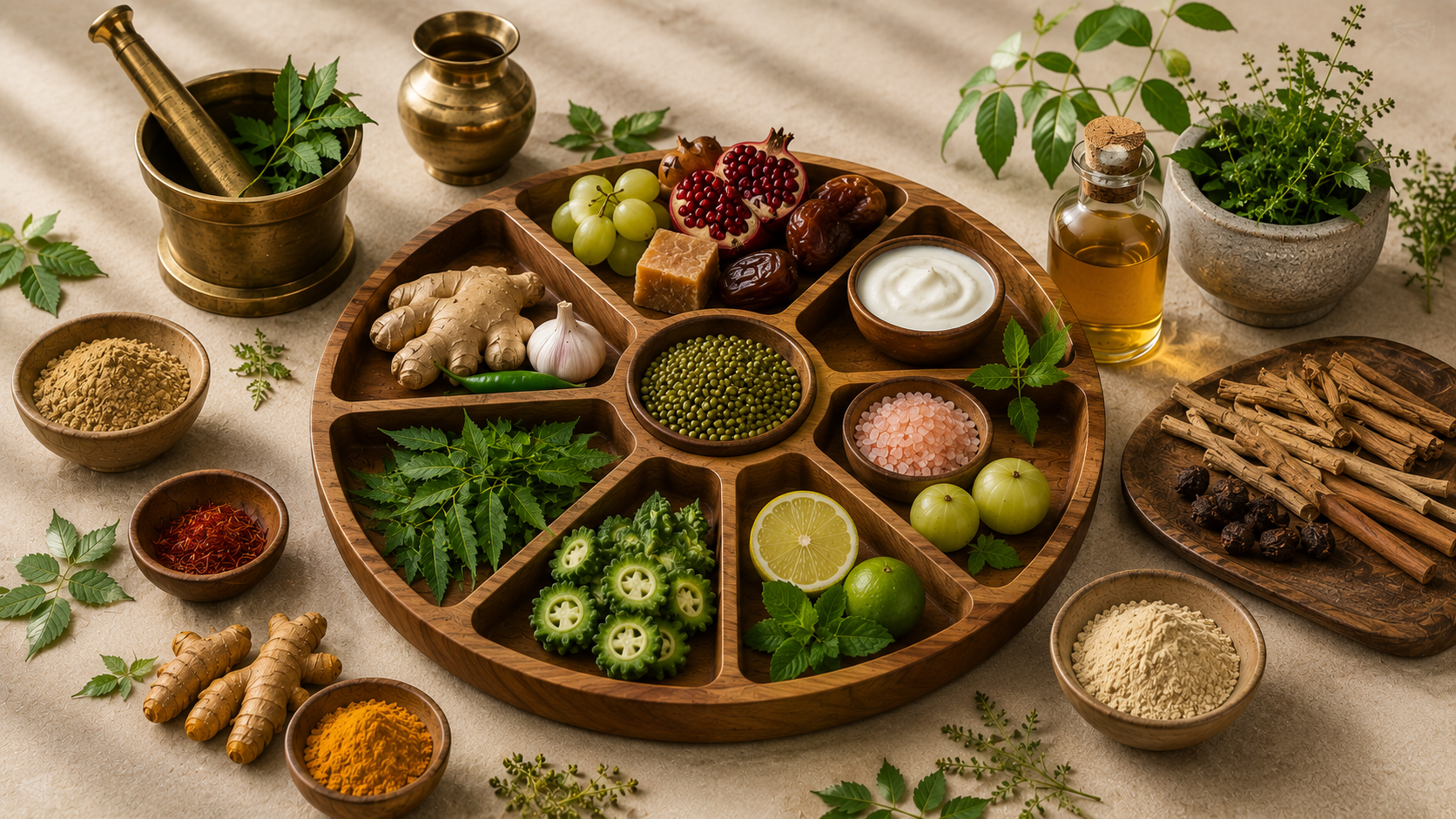
Ayurvedic Herbs Commonly Used
Ayurveda employs various herbs and classical formulations to support recovery.
Depending on the patient's condition, herbs traditionally used may include:
- Guggulu
- Rasna
- Shallaki
- Ashwagandha
- Bala
- Eranda
- Dashamoola
- Nirgundi
These herbs may support:
- Joint health
- Pain management
- Tissue nourishment
- Nervous system balance
However, self-medication is not advisable. Ayurvedic medicines should always be selected according to individual assessment.
Food and Diet Recommendations
Diet is often overlooked in pain management.
From an Ayurvedic perspective, proper nourishment supports tissue repair and helps regulate Vata.
Foods That May Be Helpful
- Warm cooked meals
- Ghee in moderation
- Mung dal
- Steamed vegetables
- Soups
- Seasonal fruits
- Whole grains
- Warm herbal infusions
Foods Often Better Avoided
- Excessively cold foods
- Packaged snacks
- Carbonated drinks
- Dry foods
- Deep-fried foods
- Excess caffeine
- Irregular eating patterns
Consistency is often more important than perfection.
Practical Lifestyle Measures
Small daily habits can significantly influence recovery.
Consider:
- Maintaining proper posture
- Avoiding prolonged sitting
- Taking walking breaks
- Practising gentle stretching
- Using ergonomic workstations
- Maintaining healthy body weight
- Getting adequate sleep
- Managing stress effectively
Healing is rarely dependent on a single therapy. It is usually the cumulative effect of many positive daily choices.
Common Mistakes Patients Make
In clinical practice, certain patterns appear repeatedly.
Ignoring Early Symptoms
Many individuals wait until pain becomes unbearable.
Complete Bed Rest
While temporary rest may help during acute episodes, prolonged inactivity often worsens stiffness and weakness.
Frequent Painkiller Dependence
Pain suppression alone does not address underlying causes.
Self-Diagnosis
Internet-based treatment plans may not suit individual conditions.
Returning to Heavy Activity Too Soon
Premature strain can trigger recurrence.
Clinical Observations from Practice
One aspect that continually stands out in my experience is how closely sciatica is linked with lifestyle patterns.
Many patients initially focus solely on MRI findings. While imaging is valuable, recovery often depends equally on factors such as posture, work habits, sleep quality, stress levels, digestion, and physical conditioning.
Another observation is that individuals who actively participate in their recovery tend to experience better long-term outcomes than those relying exclusively on passive treatment.
The most successful cases are often those where treatment, dietary modifications, therapeutic procedures, and lifestyle adjustments work together.
Why Personalised Treatment Matters
Ayurveda does not treat MRI reports.
It treats individuals.