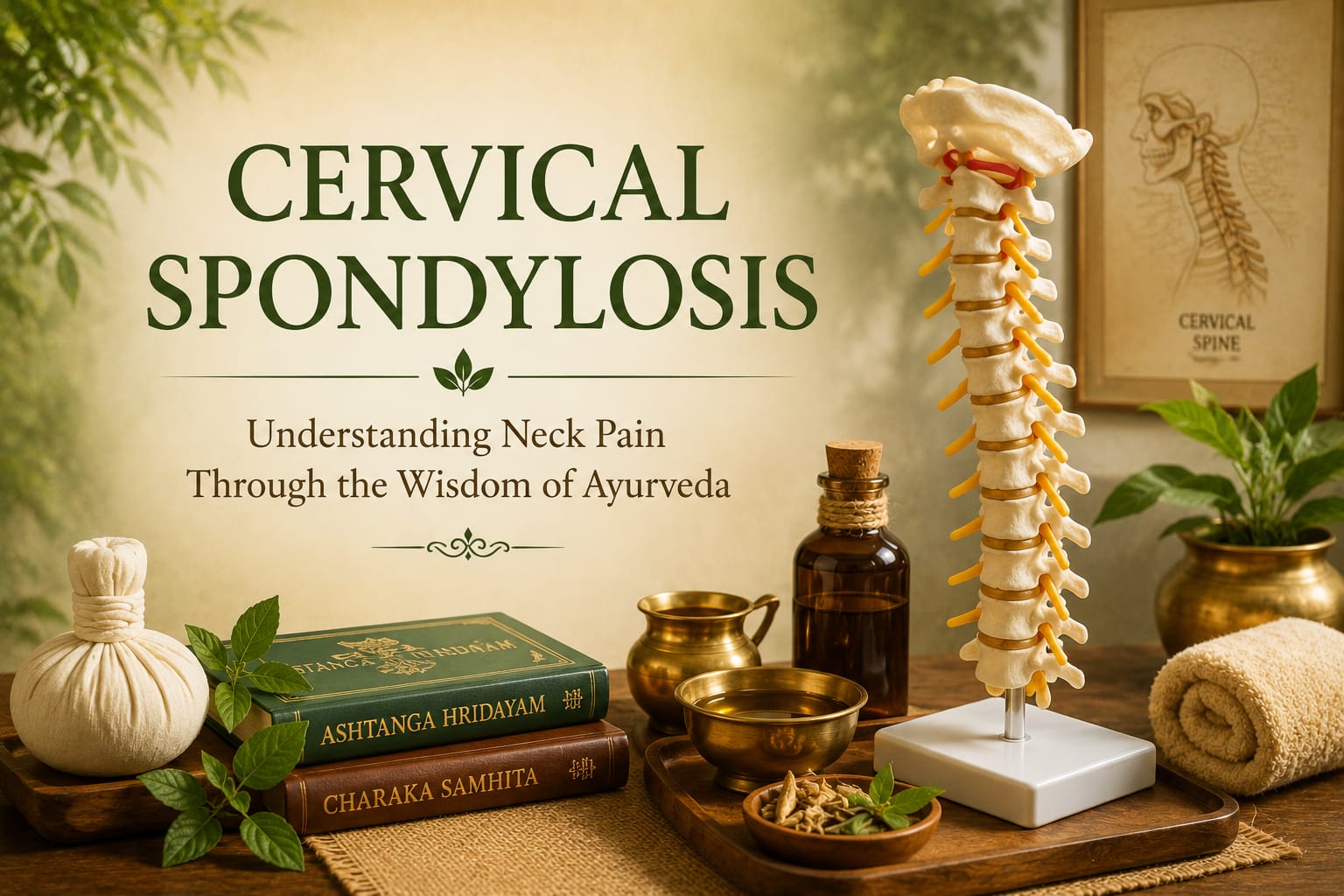
Cervical Spondylosis: Understanding Neck Pain Through the Wisdom of Ayurveda
Introduction: When a Stiff Neck Becomes More Than Just a Temporary Problem
One of the most common complaints I hear in my consultation room today is, "Doctor, my neck pain just doesn't go away."
Sometimes it begins as a mild stiffness after a long day at work. For others, it starts with discomfort while using a mobile phone or laptop. Many ignore it initially, assuming it is simply fatigue, poor sleep, or age-related wear and tear. However, when the pain begins radiating to the shoulders, causes headaches, restricts movement, or creates tingling sensations in the hands, it often points towards a condition known as cervical spondylosis.
Over the years, I have observed that cervical spondylosis is no longer a condition seen only among elderly individuals. Young professionals, homemakers, students, and even teenagers are increasingly experiencing neck-related problems due to modern lifestyle habits.
The good news is that cervical spondylosis can often be managed effectively when identified early and approached holistically. Ayurveda offers valuable insights into understanding not only the symptoms but also the deeper imbalances that contribute to the condition.
In this article, I would like to share a practical and patient-friendly understanding of cervical spondylosis from both modern and Ayurvedic perspectives.
What Is Cervical Spondylosis?
The cervical spine refers to the seven vertebrae present in the neck region.
Cervical spondylosis is a degenerative condition affecting these vertebrae, the intervertebral discs, joints, ligaments, and surrounding tissues. As age progresses or due to repetitive strain, these structures gradually undergo wear and tear.
This can lead to:
- Disc degeneration
- Reduction in disc space
- Formation of bone spurs
- Joint stiffness
- Nerve compression
- Restricted neck movement
While degeneration is a natural part of ageing, modern lifestyle factors often accelerate these changes and cause symptoms much earlier than expected.
Why Is Cervical Spondylosis Becoming So Common Today?
A generation ago, neck pain was largely associated with advancing age.
Today, prolonged screen exposure has changed that reality.
Consider a typical day:
- Several hours on laptops
- Continuous smartphone usage
- Poor workstation ergonomics
- Reduced physical activity
- Mental stress
- Irregular sleep patterns
Our neck was designed to support the head in balanced alignment. Unfortunately, modern habits place excessive strain on the cervical spine for prolonged periods.
I often tell my patients that our spine quietly tolerates years of neglect before finally demanding attention through pain.
Understanding Cervical Spondylosis Through Ayurveda
Ayurveda does not describe cervical spondylosis under a single disease name exactly as modern medicine does.
However, the condition closely resembles disorders involving aggravated Vata Dosha affecting the neck region.
In Ayurvedic understanding, Vata governs:
- Movement
- Nervous system functions
- Joint health
- Musculoskeletal coordination
When Vata becomes aggravated, dryness, degeneration, stiffness, pain, cracking sounds, and restricted movement begin to manifest.
Many cervical spondylosis patients present with symptoms that clearly indicate Vata imbalance.
Conditions described under:
- Greeva Graha (neck stiffness)
- Manyastambha (neck rigidity)
- Sandhigata Vata (degenerative joint disorders)
- Asthi and Majja Dhatu depletion
often overlap with the clinical picture of cervical spondylosis.
Ayurveda focuses on identifying the root imbalance rather than merely suppressing symptoms.
Root Causes According to Ayurveda
Several factors contribute to Vata aggravation and cervical degeneration.
Improper Posture
Constant forward bending of the neck while looking at screens creates sustained stress on cervical structures.
Excessive Physical Strain
Improper lifting techniques, repetitive neck movements, and occupational stress can accelerate wear and tear.
Natural Ageing
Age naturally increases Vata dominance within the body.
Inadequate Nutrition
Poor nourishment affects bone and tissue health over time.
Chronic Stress
Mental stress and anxiety can increase muscular tension around the neck and shoulders.
Sleep Disturbances
Inadequate rest prevents proper tissue recovery and healing.
Sedentary Lifestyle
Lack of movement weakens supporting muscles and compromises spinal stability.
Early Signs You Should Not Ignore
Many patients recall having symptoms months or even years before seeking treatment.
Some early warning signs include:
- Neck stiffness on waking up
- Pain after prolonged computer use
- Difficulty turning the head
- Shoulder heaviness
- Frequent headaches
- Pain radiating towards the arms
- Tingling sensations in fingers
- Reduced grip strength
- Muscle tightness around neck and shoulders
- Cracking sounds during neck movement
Early intervention often leads to better outcomes and prevents progression.
Common Symptoms of Cervical Spondylosis
The severity varies from person to person.
Neck Pain
The most common symptom, often worsening after prolonged sitting or activity.
Restricted Movement
Patients may find it difficult to turn their head fully.
Shoulder and Upper Back Pain
The discomfort often extends beyond the neck.
Headaches
Particularly at the back of the head.
Nerve-Related Symptoms
When nerves become compressed, symptoms may include:
- Tingling
- Numbness
- Burning sensations
- Weakness in arms or hands
Dizziness
Some patients report occasional dizziness associated with cervical dysfunction.
The Ayurvedic View of Degeneration
A concept often overlooked in modern discussions is tissue nourishment.
According to Ayurveda, healthy bones, joints, and nerves depend on proper nourishment of deeper tissues known as Dhatus.
When digestion becomes weak and tissue nutrition is compromised over years, degeneration accelerates.
Therefore, Ayurvedic management does not focus solely on the neck.
We evaluate:
- Digestive strength
- Sleep quality
- Stress levels
- Dietary habits
- Lifestyle patterns
- Body constitution
- Dosha balance
This broader assessment helps create lasting improvements.
Ayurvedic Treatment Approaches for Cervical Spondylosis
One of the strengths of Ayurveda lies in its individualized treatment approach.
No two patients receive exactly the same treatment plan.
Management generally includes:
Reducing Pain and Inflammation
Therapies are selected to calm aggravated Vata and improve circulation.
Improving Mobility
Restoring movement is an important treatment goal.
Nourishing Degenerated Tissues
Specific medicines and therapies support tissue rejuvenation.
Strengthening Supporting Structures
Muscles, ligaments, and joints require ongoing support.
Preventing Recurrence
Lifestyle correction forms an essential component of treatment.
Panchakarma Therapies for Cervical Spondylosis
At Sukrutham Ayurveda Chikitsalayam, Panchakarma therapies are carefully chosen according to the patient's condition, age, strength, and stage of disease.
Greeva Basti
One of the most beneficial therapies for cervical disorders.
Warm medicated oil is retained over the neck region using a specially prepared reservoir.
Benefits may include:
- Reduction in stiffness
- Improved mobility
- Enhanced local nourishment
- Relief from pain
Abhyanga
Therapeutic oil massage helps reduce Vata aggravation and muscular tension.
Pizhichil
Warm medicated oil therapy that provides deep nourishment and relaxation.
Elakizhi
Herbal poultice therapy that helps improve circulation and relieve stiffness.
Nasyam
Administration of medicated oils through the nasal route.
Classical Ayurvedic texts consider the nose as the gateway to the head region. Nasyam is often beneficial in conditions involving the neck, head, and nervous system.
Basti Therapy
In chronic degenerative conditions, medicated enemas are often regarded as one of the most effective therapies for balancing Vata Dosha.
Ayurvedic Medicines and Herbal Support
Ayurvedic medicines are selected after proper evaluation and should never be self-prescribed.
Depending on the individual's condition, practitioners may consider formulations that help:
- Balance Vata
- Support bone health
- Improve nerve function
- Reduce inflammation
- Nourish deeper tissues
The selection varies significantly from person to person.
This is why professional assessment remains important.
Diet Recommendations for Cervical Spondylosis
Food plays a crucial role in managing Vata-related disorders.
Foods That May Be Helpful
- Warm freshly cooked meals
- Ghee in moderation
- Mung dal preparations
- Soups
- Cooked vegetables
- Milk if suitable for the individual
- Sesame seeds
- Almonds
- Traditional nourishing foods
Hydration Matters
Adequate hydration supports tissue health and flexibility.
Foods Often Reduced
Patients may benefit from limiting:
- Excessively dry foods
- Packaged snacks
- Cold refrigerated foods
- Excessive fast foods
- Irregular meal patterns
The goal is not restriction but nourishment.
Lifestyle Practices That Support Recovery
Simple daily practices often make a remarkable difference.
Correct Your Screen Position
The screen should ideally be at eye level.
Take Movement Breaks
Avoid sitting continuously for hours.
Improve Sleep Posture
Use an appropriate pillow that supports natural neck alignment.
Practice Gentle Stretching
Guided neck exercises may improve flexibility and strength.
Manage Stress
Mental stress frequently manifests as neck and shoulder tightness.
Stay Physically Active
Regular movement promotes circulation and musculoskeletal health.
Common Mistakes People Make
Over the years, I have repeatedly observed certain mistakes that delay recovery.
Ignoring Early Symptoms
Many seek treatment only after symptoms become severe.
Excessive Painkiller Dependence
Temporary relief may mask the underlying issue.
Self-Medication
Not all neck pain is cervical spondylosis.
Sudden Aggressive Exercises
Improper exercises may worsen symptoms.
Continuing Poor Posture
Even effective treatments can fail if the causative habits continue.
Stopping Treatment Too Early
Symptom improvement does not always mean complete recovery.
What Clinical Experience Has Taught Me
In practice, cervical spondylosis rarely develops overnight.
It is usually the result of years of accumulated strain.
I often meet young software professionals who spend ten to twelve hours daily at a workstation. Many arrive after months of recurring pain that temporarily improves and then returns.
I have also seen homemakers who carry significant physical responsibilities while neglecting their own discomfort for years.
What stands out consistently is this: patients who actively participate in their re