
Nasya
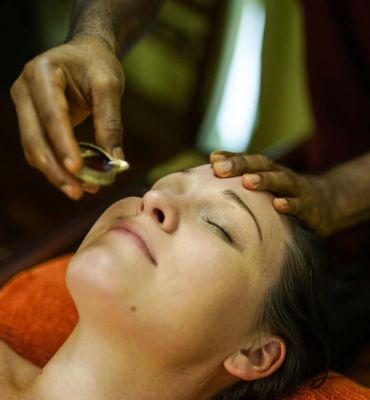
Nasya is one of the panchakarma therapy in which medicated oils, ghee, herbal juices or fine powders are administered through the nostrils.
Nasya is one of the five main cleansing therapies of Panchakarma. In it, medicated oils, ghee, herbal juices or fine powders are administered through the nostrils. Ayurveda describes the nose as the doorway to the head. Substances placed here are believed to reach the sinuses, throat, eyes, ears and brain, and to clear excess Kapha and other doshas from the head and neck region.
Nasya is used for problems above the collarbones, from blocked sinuses and headaches to hair fall and disturbed sleep. It can be a stand-alone treatment or part of a full Panchakarma programme.
Types of Nasya
Cleansing (Shodhana or Virechana Nasya): Uses stronger herbs to clear heavy mucus and congestion from the head. It is suited to strong individuals with Kapha-dominant conditions.
Nourishing (Brimhana Nasya): Uses ghee or nourishing oils to feed and strengthen. It is suited to dryness, weakness and Vata-related conditions.
Pacifying (Shamana Nasya): Uses mild, soothing preparations to calm irritation and inflammation, especially Pitta-related conditions.
Daily maintenance (Pratimarsha Nasya): Two small drops of medicated oil in each nostril as part of a daily routine, for those advised to do so.
Steps of Nasya
1. Preparation (Purva Karma)
Assessment: The physician evaluates your condition, dosha balance, strength and the season, then selects the type of Nasya and the medicine.
Timing: Treatment is usually given in the morning on an empty stomach, or when the previous meal has been fully digested.
Face and neck massage: A gentle massage with warm oil over the forehead, cheeks, temples, neck and shoulders relaxes the area.
Mild herbal steam: Warm steam over the face and neck loosens congestion and opens the nasal passages.
2. Main Procedure (Pradhana Karma)
You lie on your back, head slightly tilted back and neck supported, with eyes closed.
The prescribed medicine is warmed gently and instilled into each nostril in the measured amount, one nostril at a time.
You breathe in gently so the medicine can spread through the passages.
Any medicine or mucus that reaches the throat is spat out rather than swallowed.
3. Post-Treatment Care (Paschat Karma)
Gentle massage: Palms, soles, shoulders and neck are massaged lightly.
Herbal smoke or gargle: Depending on the condition, medicated smoke inhalation or a warm water gargle may be advised.
Rest: Resting quietly for a short while afterwards is important.
Precautions for the day: Avoid cold wind, dust, smoke, cold water on the head, heavy exertion and daytime sleep. Take light, warm, easily digested food.
Benefits
Clears congestion and improves breathing
Reduces frequent headaches and heaviness of the head
Lubricates and protects the nasal lining
Supports healthy hair, and may help with hair fall and early greying
Relieves stiffness in the neck and shoulders
Relaxes the mind and supports better sleep
Supports the sense organs, including eyes, ears and voice
Improves resistance to seasonal allergies and colds
Indications (Conditions It May Help)
Nasya may be advised for:
Chronic sinusitis and nasal congestion
Allergic rhinitis and recurrent colds
Migraine and chronic headaches
Neck and shoulder stiffness, including cervical spondylosis
Facial paralysis (as part of a wider treatment plan)
Hair fall and premature greying
Insomnia, stress and mental fatigue
Dryness of the nose, throat or voice
Some eye, ear and speech complaints
Snoring and mouth breathing linked to nasal blockage
Contraindications (Who Should Not Undergo Nasya)
Pregnancy
Children below about 7 years and the very elderly (for stronger types)
Acute fever, cold, cough or active infection with heavy discharge (for some types)
Immediately after a meal, a bath, or heavy exercise
Hunger, thirst, exhaustion or intoxication
Recent head injury or nasal bleeding
Uncontrolled high blood pressure or serious systemic illness
Immediately after Virechana, Basti or other strong Panchakarma procedures (for cleansing types)
Overcast, stormy or extremely humid weather, when classical texts advise caution
During menstruation, unless the physician specifically advises
Nasya should be administered by a trained Ayurvedic physician or therapist. The medicine, dose and type are chosen for each person, and improper use can cause irritation or aggravate the condition.
Nasya is used for problems above the collarbones, from blocked sinuses and headaches to hair fall and disturbed sleep. It can be a stand-alone treatment or part of a full Panchakarma programme.
Types of Nasya
Cleansing (Shodhana or Virechana Nasya): Uses stronger herbs to clear heavy mucus and congestion from the head. It is suited to strong individuals with Kapha-dominant conditions.
Nourishing (Brimhana Nasya): Uses ghee or nourishing oils to feed and strengthen. It is suited to dryness, weakness and Vata-related conditions.
Pacifying (Shamana Nasya): Uses mild, soothing preparations to calm irritation and inflammation, especially Pitta-related conditions.
Daily maintenance (Pratimarsha Nasya): Two small drops of medicated oil in each nostril as part of a daily routine, for those advised to do so.
Steps of Nasya
1. Preparation (Purva Karma)
Assessment: The physician evaluates your condition, dosha balance, strength and the season, then selects the type of Nasya and the medicine.
Timing: Treatment is usually given in the morning on an empty stomach, or when the previous meal has been fully digested.
Face and neck massage: A gentle massage with warm oil over the forehead, cheeks, temples, neck and shoulders relaxes the area.
Mild herbal steam: Warm steam over the face and neck loosens congestion and opens the nasal passages.
2. Main Procedure (Pradhana Karma)
You lie on your back, head slightly tilted back and neck supported, with eyes closed.
The prescribed medicine is warmed gently and instilled into each nostril in the measured amount, one nostril at a time.
You breathe in gently so the medicine can spread through the passages.
Any medicine or mucus that reaches the throat is spat out rather than swallowed.
3. Post-Treatment Care (Paschat Karma)
Gentle massage: Palms, soles, shoulders and neck are massaged lightly.
Herbal smoke or gargle: Depending on the condition, medicated smoke inhalation or a warm water gargle may be advised.
Rest: Resting quietly for a short while afterwards is important.
Precautions for the day: Avoid cold wind, dust, smoke, cold water on the head, heavy exertion and daytime sleep. Take light, warm, easily digested food.
Benefits
Clears congestion and improves breathing
Reduces frequent headaches and heaviness of the head
Lubricates and protects the nasal lining
Supports healthy hair, and may help with hair fall and early greying
Relieves stiffness in the neck and shoulders
Relaxes the mind and supports better sleep
Supports the sense organs, including eyes, ears and voice
Improves resistance to seasonal allergies and colds
Indications (Conditions It May Help)
Nasya may be advised for:
Chronic sinusitis and nasal congestion
Allergic rhinitis and recurrent colds
Migraine and chronic headaches
Neck and shoulder stiffness, including cervical spondylosis
Facial paralysis (as part of a wider treatment plan)
Hair fall and premature greying
Insomnia, stress and mental fatigue
Dryness of the nose, throat or voice
Some eye, ear and speech complaints
Snoring and mouth breathing linked to nasal blockage
Contraindications (Who Should Not Undergo Nasya)
Pregnancy
Children below about 7 years and the very elderly (for stronger types)
Acute fever, cold, cough or active infection with heavy discharge (for some types)
Immediately after a meal, a bath, or heavy exercise
Hunger, thirst, exhaustion or intoxication
Recent head injury or nasal bleeding
Uncontrolled high blood pressure or serious systemic illness
Immediately after Virechana, Basti or other strong Panchakarma procedures (for cleansing types)
Overcast, stormy or extremely humid weather, when classical texts advise caution
During menstruation, unless the physician specifically advises
Nasya should be administered by a trained Ayurvedic physician or therapist. The medicine, dose and type are chosen for each person, and improper use can cause irritation or aggravate the condition.